


Getting leads but don't know where they come from?
Enquiries are coming in. The phone rings, forms get filled, WhatsApp messages arrive through the day. On the surface, that looks like things are working. But ask yourself one question: if someone asked which ad, which keyword, or which channel brought in your last five customers, could you actually answer that?
If you paused before answering — you're not alone, and it's not because your marketing isn't generating interest. It's because most businesses never set up a way to track where a lead comes from once it walks in the door.
Here's a scenario we hear often: a business is getting a steady flow of enquiries — some from ads, some from the website, some from a phone call, some from a WhatsApp forward. The owner knows leads are coming in. What they can't tell you is which of those sources are actually worth the money being spent on them, because none of it is tracked back to where it started.
"A lead with no source isn't really data. It's just an enquiry you'll never be able to learn from."
Five places your leads are quietly going untracked
Where Leads Get Lost
What Gets Missed
Every untracked lead is a missed learning opportunity
It's easy to treat this as a minor gap — "we're still getting leads, so what's the harm?" But the real cost shows up slowly. Every rupee or dirham spent on a channel you can't measure is a rupee spent without knowing if it's working.
Every month you keep running the same campaigns without knowing which one is actually converting is a month of budget spent on a guess rather than a decision.
"We didn't realise how much we didn't know until we could finally see it."
How Trionix Global fixes this
We don't add more channels or more spend on top of an untracked system. We connect what you already have, so every lead carries its source with it automatically.
We connect the data foundation
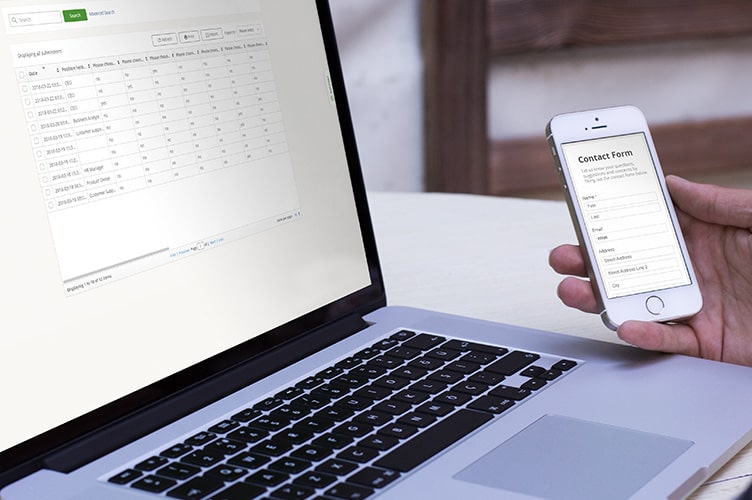
CRM, GA4, and Google Tag Manager are set up to work together, so every website enquiry is logged with the page, keyword, or campaign that generated it — not just as an anonymous entry.
We capture the enquiries that usually go missing
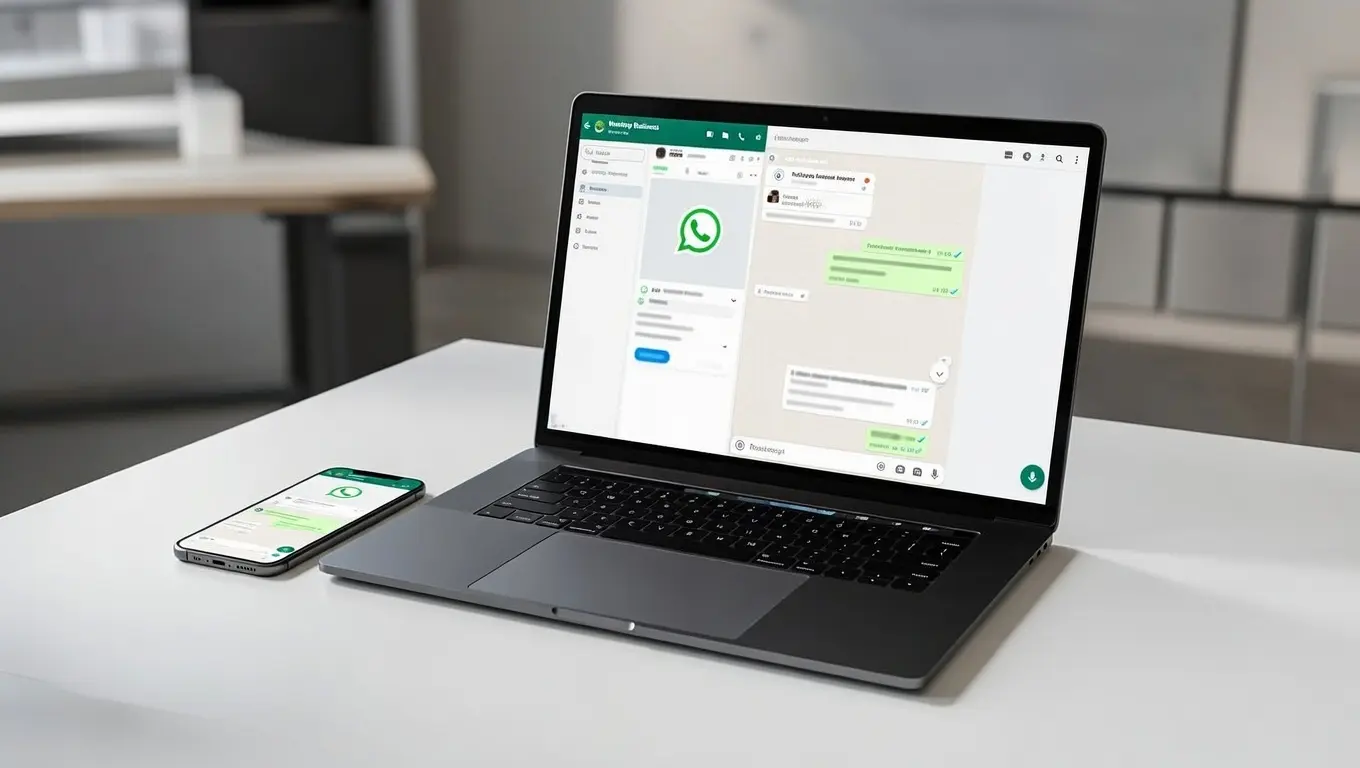
Call tracking and WhatsApp tracking are added so phone calls and message-based enquiries are no longer invisible to your reporting. Every lead, regardless of how it arrives, gets a source attached to it.
We hand you a system you can see into
Once everything is connected, you get direct access to your own CRM and GA4 dashboards — not just a monthly report, but a live view of where your leads are actually coming from, whenever you want to check.
Without lead tracking vs. with Trionix Global
| Without Lead Tracking | With Trionix Global |
|---|---|
| Leads logged with no source attached | Every lead tagged to its channel, keyword, or campaign |
| Website activity and enquiries disconnected | GA4 and GTM connected to show the full journey |
| Phone calls treated as anonymous | Call tracking credits every enquiry to its source |
| WhatsApp enquiries untracked | WhatsApp conversations traced back to origin |
| Budget decisions based on guesswork | Budget decisions based on what's actually converting |
What proper lead tracking should help you answer
- 01 Which ad, keyword, or channel generated this lead?
- 02 Which marketing source is generating the most qualified enquiries?
- 03 Can we trace phone calls and WhatsApp enquiries back to their original source?
- 04 Which campaigns are actually converting instead of just generating activity?
- 05 Where should we spend the next rupee or dirham based on what is actually working?
Stop guessing where your leads come from. Start tracking every enquiry.
Talk to Trionix GlobalFrequently Asked Questions
We already have a CRM. Do we need a new one?
Not necessarily. In most cases we connect your existing CRM properly rather than replacing it, so your team doesn't have to learn a new system.
Will adding all this tracking slow down our website?
No. Tracking runs in the background through Google Tag Manager and has no effect on how your site loads or performs for visitors.
We get most of our enquiries through WhatsApp. Is this still worth doing?
Yes. WhatsApp tracking is often the most valuable piece for businesses that rely heavily on it, since those conversations are usually the least visible in current reporting.
How long before we start seeing tracked data?
Most businesses have core tracking — CRM, GA4, and GTM — live within the first week, with call and WhatsApp tracking following shortly after.
Do we need to change our current ad campaigns for this to work?
No changes to your campaigns are required. Tracking is set up around what you're already running, so it starts capturing data immediately.

Running Digital Campaigns but Still Not Getting Results? Here's Why
You’re spending every month. The dashboard shows clicks, impressions, and “reach.” But sales aren’t moving. If that sentence describes your business right now, the problem almost certainly isn’t your budget — it’s what’s happening underneath it.
Here’s a scenario we hear on almost every discovery call: a business has been running Google Ads, Meta Ads, or both, for months. The ad account shows activity — impressions climbing, clicks coming in, maybe even a “learning phase complete” badge sitting smugly at the top of the dashboard. But when the business owner checks their actual sales numbers, their enquiry inbox, or their CRM, nothing has moved. Same leads. Same revenue. Sometimes worse.
This isn’t bad luck, and it isn’t because “ads don’t work for my industry.” In the vast majority of cases we’ve audited, campaigns fail to produce results for structural reasons that are completely fixable — once someone actually looks under the hood instead of just watching the top-line metrics.
The uncomfortable truth: a campaign can be technically “running” and still be silently broken. Ad platforms are built to keep spending your budget, not to tell you it isn’t working.
Stop Guessing. Start Growing.
If your campaigns are generating clicks but not customers, it's time to find out why. Trionix Global performs a comprehensive campaign audit to uncover tracking issues, targeting gaps, landing page problems, and budget inefficiencies that could be costing you valuable leads and revenue.
Start Your AuditThe Five Reasons Your Campaigns Aren't Converting
You’re optimizing for the wrong metric.
Most ad accounts are quietly set up to chase clicks or impressions, not qualified leads or purchases. If your conversion tracking isn’t wired to an actual business outcome — a form fill, a call, a completed sale — the algorithm has no idea what “success” means for you. It will happily deliver cheap clicks from people who were never going to buy.
Targeting is too broad, or built on assumptions instead of data.
“Anyone interested in [industry]” is not an audience. Without layered targeting built from real customer data — past buyers, site engagement, lookalikes, intent signals — your budget gets spread across people who will never convert, diluting spend that should be concentrated on your actual buyers.
The landing page is doing the opposite of the ad’s job.
An ad’s only job is to earn a click. The landing page’s job is to convert that click. When these two are built by different people at different times with no shared strategy, you get mismatched messaging, slow load times, and forms that ask for too much — and the click you paid for evaporates in seconds.
Creative fatigue is quietly killing performance.
The same three ad creatives running for four months don’t just get “boring” — the algorithm actively de-prioritizes them and your cost per result climbs, often without anyone noticing until the CFO asks why CPL doubled.
Nobody is looking at the account holistically.
This is the biggest one. Campaigns are often set up once and left running, with nobody stepping back monthly to ask: is the budget going to what’s working? Is tracking still accurate after that last website update? Has the audience saturated? Without a structured audit rhythm, small inefficiencies compound into large, invisible losses.
Quick stats:
60–70% of audited ad accounts have broken or partial conversion tracking. Fatigued creative can cost up to 3x more per lead than a refreshed set. Most core issues surface within the first 30 days of a proper audit.
What This Is Actually Costing You
It’s easy to think of underperforming ads as “wasted spend,” but the real cost runs deeper. Every rupee or dirham spent on the wrong audience is a rupee not spent finding your best customer. Every week a broken tracking setup goes unnoticed is a week your team makes decisions based on numbers that were never accurate. And every month you keep running the same ads without knowing why they’ve stopped converting is a month your competitors — who probably are auditing — pull further ahead in the auction.
The businesses that eventually fix this almost always say the same thing: “I wish we’d looked at this six months earlier.”
How Trionix Global Fixes This
We don’t start by launching new campaigns. We start by finding out exactly why the current ones aren’t performing — because scaling a broken system just scales the losses. Our approach has three stages:
The Full Campaign Audit
We go account by account, platform by platform: tracking setup, pixel health, audience structure, budget allocation, ad relevance scores, landing page alignment, and attribution accuracy. This is a diagnostic, not a guess — we show you precisely where the leaks are, backed by data pulled directly from your accounts.
Structural Optimization
Once we know what’s broken, we fix the foundation first: correcting conversion tracking, rebuilding audience segments around real customer data, restructuring campaigns around actual buying intent, and aligning ad creative with landing page messaging so the two work as one funnel instead of two disconnected pieces.
AI-Assisted Strategy Going Forward
With the foundation solid, we layer in predictive audience modeling, automated creative testing, and AI-driven budget allocation that shifts spend toward what’s actually converting in near real time — rather than waiting for a monthly report to catch a problem that’s already cost you three weeks of budget.
Old Approach | Trionix Audit-First Approach |
Launch campaigns and “monitor” | Audit existing accounts before touching a single rupee of new spend |
Optimize for clicks and impressions | Optimize for tracked, revenue-linked conversions |
Same creative for months | Structured creative refresh cycle based on fatigue signals |
Ads and landing pages built separately | Funnel built as one connected system |
Manual, reactive budget shifts | AI-assisted, near real-time budget reallocation |
A campaign audit isn’t a criticism of what you’ve done so far — it’s the fastest, cheapest way to find out exactly where your next rupee of ad spend should go.
